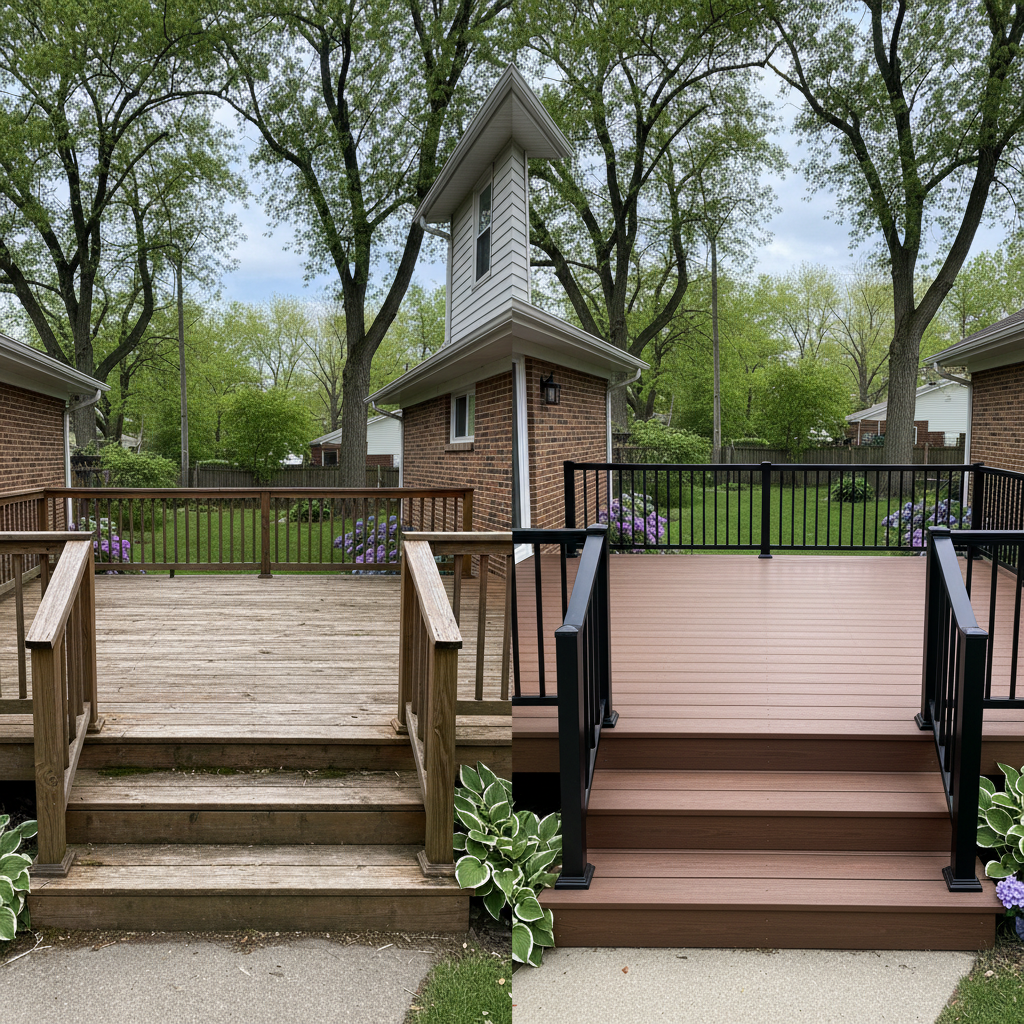
Alright, so you're thinking about a Trex deck for your place. Good choice. Trex is tough, looks sharp, and honestly, it's a smart investment for any Detroit homeowner. But as you start looking into it, you'll hear about "capped" and "uncapped" composite decking. What's the real difference? Which one makes sense for you? Let's break it down, because there's a pretty big distinction, especially with our Michigan weather.
So, What's the Deal with Capped vs. Uncapped?
Think of it this way: uncapped composite is the original, the old school. It's basically a mix of wood fibers and recycled plastic, all pressed together. When it first came out, it was a game-changer because it didn't rot or splinter like traditional wood. But it had its quirks, you know? It could stain, fade a bit over time, and sometimes you'd get mold or mildew spots if you weren't constantly cleaning it.
Capped composite, on the other hand, is like uncapped's younger, tougher sibling. It still has that same wood-plastic core, but then it gets wrapped, or "capped," in a super-durable plastic shell. This usually covers all four sides, or at least the top and sides. That cap is what changes everything. It's basically armor for your deck board.
Cost: Where Your Money Really Goes
Let's be direct: capped Trex will cost you more upfront. That's just how it is. Uncapped options, like the Trex Accents line (which they've mostly stopped making, but you might still find), were generally cheaper per linear foot. Adding that protective cap during manufacturing adds to the price tag.
However, and this is a really important "however," those initial savings on uncapped can vanish pretty quickly down the road. We're talking about long-term value here, not just what you pay today. Consider what you're actually getting for that extra cash.
Durability & Maintenance: The Real Detroit Test
This is where capped composite truly shines, especially for us here in Michigan. Our winters are no joke, right? Snow, ice, those brutal freeze-thaw cycles, and then the hot, humid summers. That's a lot for any material to put up with.
- Stain Resistance: Uncapped boards could really soak up spills – a dropped hot dog, a splash of red wine from your summer BBQ, or just plain dirt. Getting those stains out could be a real chore. Capped boards? That plastic shell is practically bulletproof. Most spills wipe right off, easy peasy.
- Fade Resistance: The sun in July and August can be intense. Over years, uncapped boards would definitely show some fading. Capped Trex, with its advanced cap, is designed to resist fading and keep its vibrant color much longer. This makes a huge difference for curb appeal.
- Mold & Mildew: Because uncapped composite has exposed wood fibers, it could become a perfect spot for mold and mildew to grow, especially in shady, damp areas. You'd be scrubbing constantly. The cap on modern Trex means moisture can't get to those wood fibers, so mold and mildew become much less of a problem. A quick wash is usually all it takes.
- Scratch Resistance: No deck is completely scratch-proof, let's be real. But the cap layer on Trex's higher-end lines offers significantly better scratch resistance than uncapped boards. Moving patio furniture or kids playing around becomes less of a worry.
With uncapped, you'd be putting in a bit more elbow grease, maybe even needing specialized cleaners. For capped, it's usually just soap, water, and a soft brush. That's a big win for your weekend plans.
Appearance: Looks That Last
Early uncapped composites often looked a little... well, plasticky. And as they got older, the color could just get dull. Modern capped Trex, especially their premium lines, has come a long way. They feature incredibly realistic wood grain patterns, multi-tonal colors that mimic exotic hardwoods, and a much richer, more natural look. The cap is what allows for these sophisticated aesthetics that actually hold up over time. If you want your deck to look fantastic for years without constant upkeep, capped is definitely the way to go.
My Recommendation for Detroit Homeowners
Look, if you're building a deck in Detroit, whether it's in a historic neighborhood like Boston-Edison or a newer development, you need something that can handle our unique climate. You want something that's going to look great for years without you having to baby it. That's why I strongly recommend capped composite Trex decking.
Yes, the initial cost is higher. I totally get that. But when you consider the minimal maintenance, superior stain and fade resistance, and how much longer it's going to look fantastic, it's just a no-brainer. You're saving yourself headaches, time, and potentially more money later on cleaning products or even an early replacement. It's an investment that truly pays off in durability and enjoyment.
We've installed countless decks with Quantum Deck Solutions, and the feedback on capped Trex is always the same: homeowners love how little they have to do to keep it looking new. It just makes sense for our city and our weather. You want to spend your summer enjoying your deck, not scrubbing it, right?